Overview
A sewage backup is one of the few home emergencies that's genuinely a health hazard, not just a mess. The water involved — what the industry calls Category 3 "black water" — carries bacteria, viruses, and other pathogens. This is the one situation where the "what NOT to do" list matters as much as the cleanup itself. Here's what you need to know. (General information, not medical advice — for any exposure or health concerns, contact a doctor.)
Why sewage is dangerous
Sewage backups can contain harmful microorganisms — bacteria like E. coli, viruses, parasites, and other contaminants — that can cause illness through contact, contaminated surfaces, or breathing aerosols. It also soaks rapidly into porous materials (carpet, drywall, upholstery), which then can't simply be cleaned and are usually removed. The health risk is real, which is why proper protective equipment and protocols exist.
What NOT to do (this list matters)
- Don't touch it or wade in it. Avoid all contact with the contaminated water and anything it has touched.
- Don't try to clean it up yourself. Household cleaners and a mop don't disinfect a biohazard, and DIY cleanup risks exposure and spreads contamination.
- Don't use affected drains or plumbing. Running water that drains into the backup makes it worse.
- Don't use a household vacuum or your HVAC in the affected area — it can spread contaminants.
- Don't let children or pets near the area — keep everyone well clear.
- Don't eat or store anything that contacted the water; discard contaminated food.
- Don't ignore it or "wait and see" — contamination and damage worsen, and odor and pathogens spread.
What TO do
1. Keep everyone (and pets) away from the affected area. 2. Stop using water that drains toward the backup; if you know the cause is your own plumbing, stop adding to it. 3. Ventilate if you safely can (open a window in the area) — but don't run the HVAC. 4. Call professionals immediately — sewage cleanup requires protective equipment, proper extraction, removal of unsalvageable materials, and thorough disinfection. We're available 24/7. 5. Document for insurance from a safe distance (photos), and check coverage — sewer backup is often excluded from standard policies unless you have a specific endorsement (see does insurance cover water damage?).
How professionals handle it
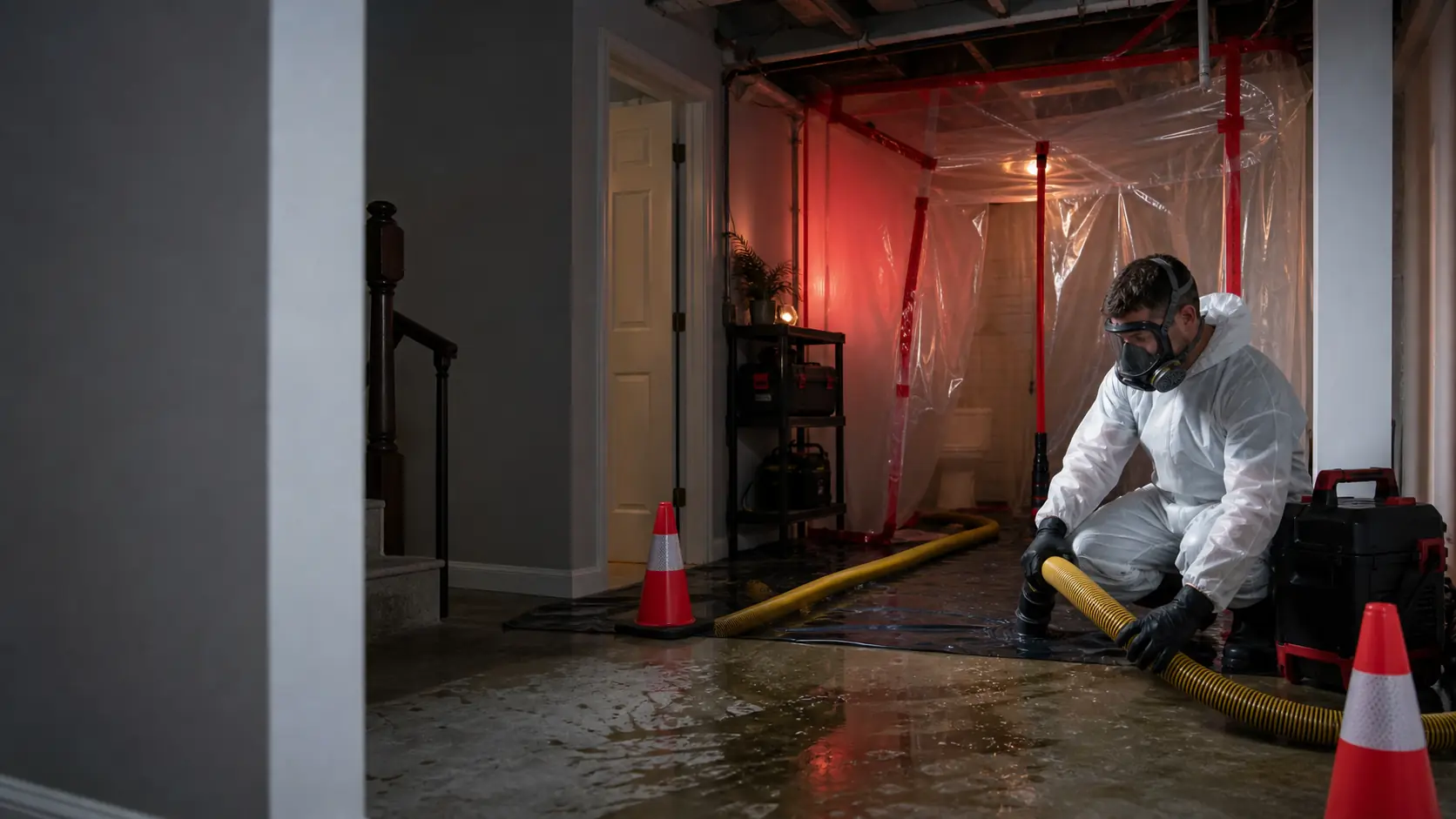
Certified crews handle Category-3 water with the right protective gear and follow IICRC protocols: safe extraction, removal of contaminated porous materials, cleaning and disinfecting all affected surfaces, drying, and deodorizing — restoring the area to a safe condition. See our sewage cleanup service.
The takeaway
Sewage backup is the one water emergency where the right first move is to stay away and call a professional. It's a biohazard, not a chore — protect your household's health and let trained, equipped crews make it safe.
FAQs
Is sewage backup safe to clean myself?
No. Sewage cleanup requires protective equipment, removal of contaminated materials and proper disinfection.
What water category is sewage backup?
Sewage backup is Category 3 black water, the highest contamination category used in restoration.
Does insurance cover sewage backup?
Coverage often depends on whether the policy has a sewer or drain backup endorsement. The insurance carrier decides coverage.