

Overview
Few household words cause as much panic as "black mold." The internet is full of frightening claims — but the reality is more measured than the headlines suggest. Here's an honest, balanced look at what black mold is, what it can and can't do, and what you should actually do about it. (This is general information, not medical advice — for health concerns, talk to a doctor.)
What people mean by "black mold"
"Black mold" usually refers to Stachybotrys chartarum, a greenish-black mold that grows on damp, cellulose-rich materials like drywall and wood after prolonged moisture. But plenty of harmless-to-moderate molds also look dark, so a black-colored patch isn't automatically Stachybotrys — and color alone doesn't tell you how risky it is.
The honest take on health effects
Here's where balance matters. Mold exposure can cause real symptoms, particularly in sensitive people:
What the science doesn't strongly support is the dramatic "toxic mold causes severe systemic illness in healthy people" narrative that drives a lot of online fear. Reactions vary widely from person to person — many people have no noticeable reaction, while sensitive individuals can be quite affected. The responsible position: take it seriously, don't panic.
- Allergy-type reactions: sneezing, congestion, runny nose, itchy eyes.
- Respiratory irritation, coughing, or wheezing.
- Worsened symptoms for people with asthma, allergies, or weakened immune systems.
So — is it dangerous?
The practical answer: mold of any color shouldn't be living in your home, and it should be removed properly — both because some people react to it and because its presence signals an ongoing moisture problem that's also damaging your home. But you don't need to treat a small patch as a five-alarm health emergency. You need to address it correctly and fix what's feeding it.
Why DIY scrubbing isn't enough
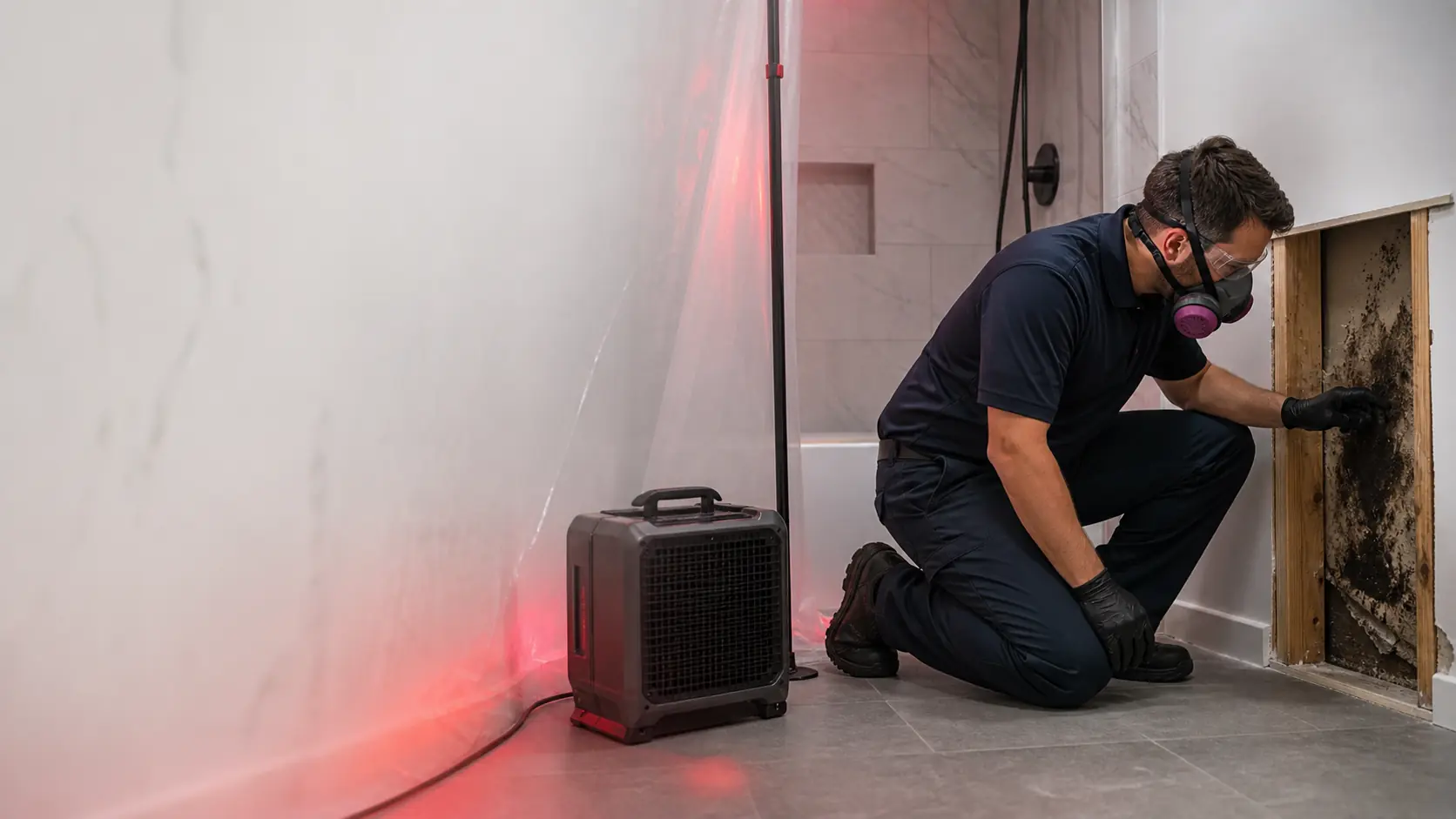
Wiping visible mold with bleach treats the symptom, not the cause. Disturbing mold can release spores into the air, spreading it elsewhere, and if the moisture source isn't fixed, it returns. For more than a small surface spot, professional remediation with containment is the right move — see mold inspection vs. remediation.
What to do
If you see or smell mold, don't disturb it, and get it assessed. Our AMRT-certified team identifies the extent, removes it safely following IICRC protocols, and corrects the moisture source. We start with a free inspection.
FAQs
Can I tell mold type by color?
No. Color is not a reliable way to identify mold species or risk level. Inspection focuses on moisture source, growth pattern and affected materials.
Is this medical advice?
No. This article is general restoration guidance. For health symptoms or medical risk, contact a qualified healthcare professional.
Should I spray bleach on mold?
Bleach may discolor surface growth but does not address hidden moisture, contaminated porous materials or safe containment.