

Overview
Filing a water damage claim feels overwhelming when you're already dealing with the damage itself. Break it into steps and it's manageable. Here's the process, in order. (General guidance — your insurer's specific procedures and your policy terms govern.)
Step 1: Stop the damage and stay safe
Before anything else, ensure safety and stop the water source if you safely can (shut off the main). Mitigating further damage isn't just smart — most policies require you to take reasonable steps to prevent additional damage.
Step 2: Document everything thoroughly
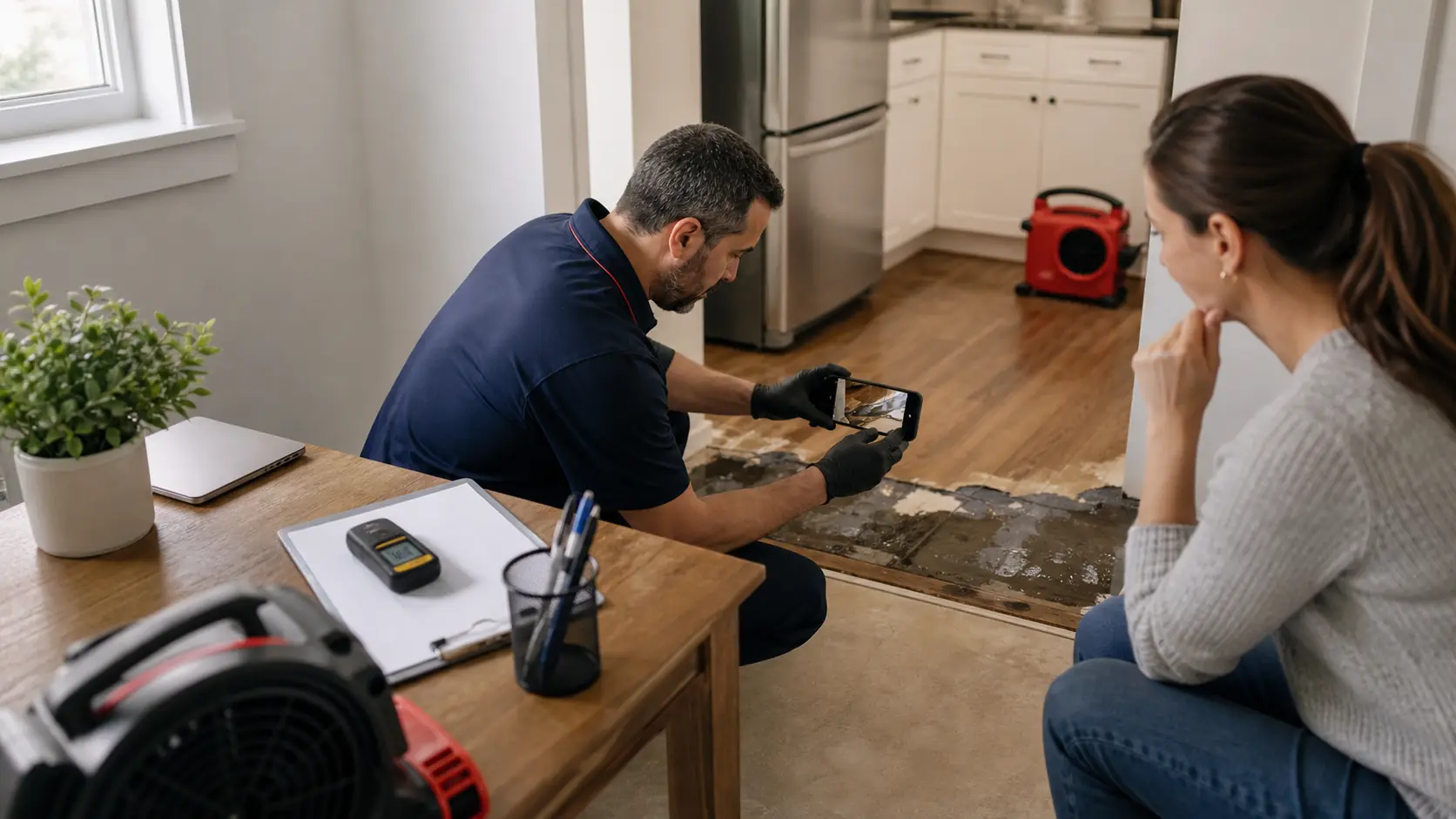
Before cleanup, photograph and video the damage extensively: every affected room, standing water, damaged belongings, and the source if visible. Capture serial numbers and receipts for high-value damaged items if you have them. This evidence is the foundation of your claim — more in documenting damage for your insurance claim.
Step 3: Call a restoration company
Contact a professional right away. Fast mitigation limits the damage and demonstrates to your insurer that you acted responsibly. We answer 24/7, document the loss to industry standards, and work directly with your insurer.
Step 4: Notify your insurer and open the claim
Call your insurance company (or use their app/portal) to report the loss promptly. Have your policy number ready and give a factual account of what happened and when. Ask about your deductible, whether you have Additional Living Expenses (ALE) coverage if the home is uninhabitable, and the timeline for an adjuster.
Step 5: Work with the adjuster
The insurer will assign an adjuster to assess the damage. Be present if you can, provide your documentation, and share the restoration company's assessment and estimate. A thorough, professional estimate that aligns with how claims are evaluated helps avoid underpayment — see what restoration companies wish you knew about adjusters.
Step 6: Keep records of everything
Log every call, email, and document — names, dates, and what was said. Keep receipts for any out-of-pocket costs related to the loss (temporary repairs, lodging). Organized records make the difference if questions arise.
Step 7: Don't wait on cleanup for the adjuster
A common myth is that you must wait for the adjuster before any cleanup. You don't — and delaying can worsen the damage and complicate the claim. Document thoroughly, then let mitigation proceed. We handle both in parallel.
A note on what we do (and don't)
We're a restoration company: we document the damage, provide detailed estimates, and coordinate directly with your insurer. We're not your insurance company or a public adjuster, and coverage decisions rest with your insurer — but thorough documentation is the best thing you can bring to the table.
FAQs
Should I call insurance or restoration first?
If the loss is active, stop the source and call for mitigation quickly, then notify your insurer as soon as possible. Both steps matter.
Can restoration start before the adjuster arrives?
Often yes. Emergency mitigation can prevent additional damage. Document the scene first and follow your insurer's reporting requirements.
Is US Creative Restoration an adjuster?
No. The team restores the property and documents the loss. Coverage decisions remain with the insurance carrier.