

Overview
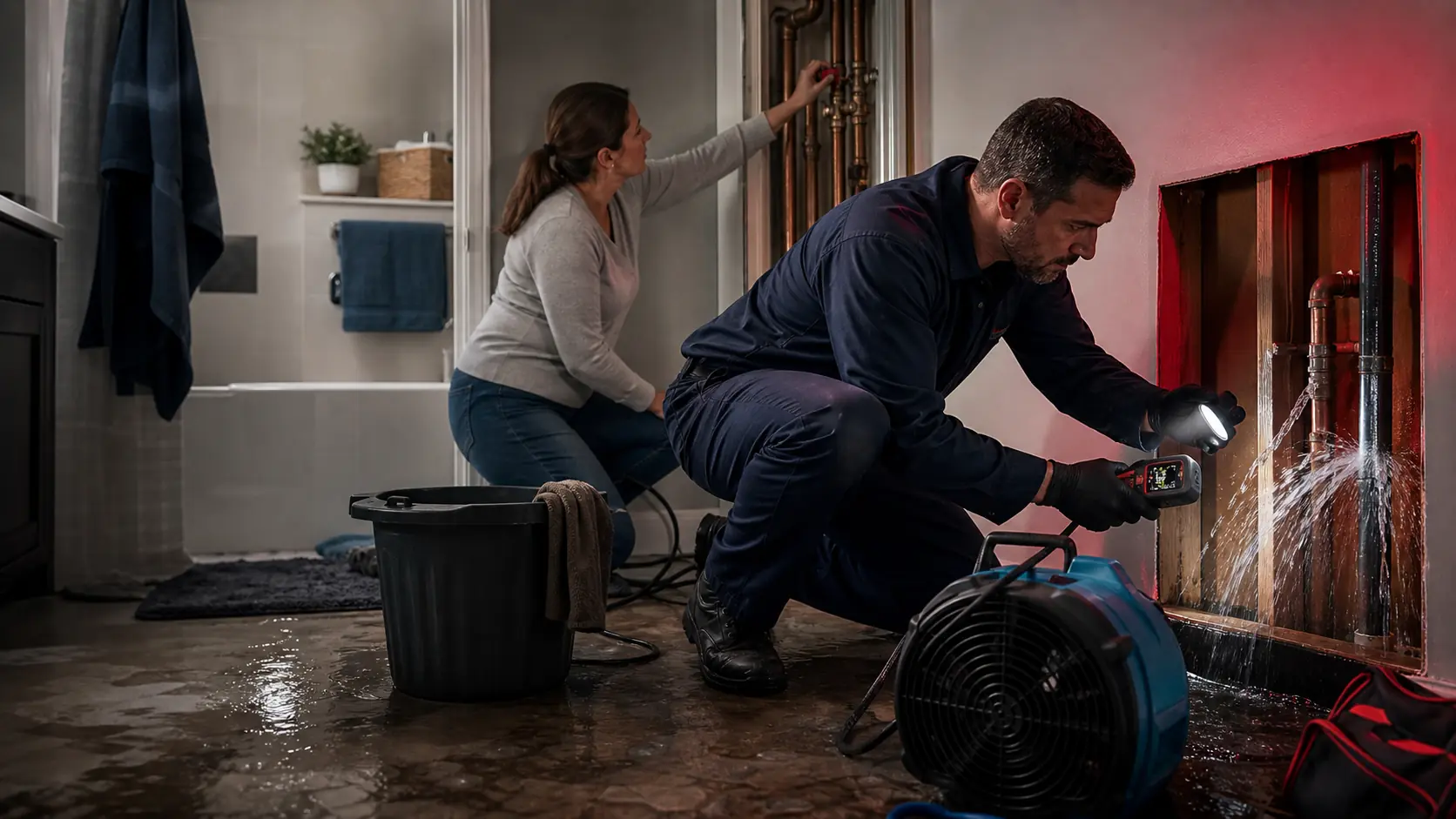
A burst pipe is one of the fastest-moving home emergencies there is — it can flood a room in minutes and send water through ceilings and into floors below. What you do in the first few minutes genuinely affects how much damage you're left with. Here's exactly what to do, in order. (General guidance.)
1. Shut off your water — now
This is the single most important step. Find your main shut-off valve and turn it off to stop water from flowing. Every minute it keeps running is more water in your home. (This is why knowing your shut-off location before an emergency matters — locate it today if you don't know it.) If the burst is at a specific fixture with its own valve, you can shut that, but the main is the sure stop.
2. Turn off the power if water is near electrical
If water is near outlets, the electrical panel, or appliances, shut off power to those areas at the breaker — but only if you can reach the panel without standing in water. Never touch electrical components while in contact with water. If you can't do it safely, stay clear and tell the professionals when they arrive.
3. Move water away from the source / open drainage
If safe, help the water drain or move toward a drain, and stop it from reaching unaffected rooms. Towels, a wet/dry shop vac (not a household vacuum), and mops can help contain a small amount — but don't put yourself at risk.
4. Protect your belongings
Move furniture, electronics, rugs, and valuables out of the water's path. Lift draperies and pin up skirting. Place foil or wood blocks under furniture legs to prevent staining. Get items off wet floors.
5. Document everything for insurance
Before cleanup changes the scene, photograph and video the burst, the water, and the damaged areas and items. Burst pipes are typically a covered, sudden event — good documentation supports your claim. (See documenting damage for your insurance claim.)
6. Call for professional help
Call a restoration company right away — the faster extraction and structural drying begin, the more is saved and the lower the chance of mold. We answer 24/7 and are on-site in about 45 minutes: (408) 639-5349.
What about the pipe itself?
Our focus is the water-damage emergency — stopping the spread, extraction, drying, and restoration. For the actual pipe repair, we can coordinate a licensed plumber so the whole problem is handled. The priority in the moment is stopping and removing the water.
What NOT to do
- Don't ignore "hidden" water — it's wicking into walls and subfloors even if the surface looks manageable.
- Don't use a household vacuum on standing water.
- Don't enter rooms with sagging ceilings from water pooling above.
- Don't wait to call — burst-pipe damage compounds by the minute.
FAQs
Where should I shut off water after a burst pipe?
Use the main shut-off valve if you know where it is. A fixture valve can help, but the main valve stops water to the home.
Can I use a regular vacuum on standing water?
No. Use only equipment rated for water, such as a wet/dry shop vac, and only when the area is electrically safe.
Does US Creative Restoration repair the pipe?
The team focuses on the water-damage emergency and can coordinate a licensed plumber for the actual pipe repair.